
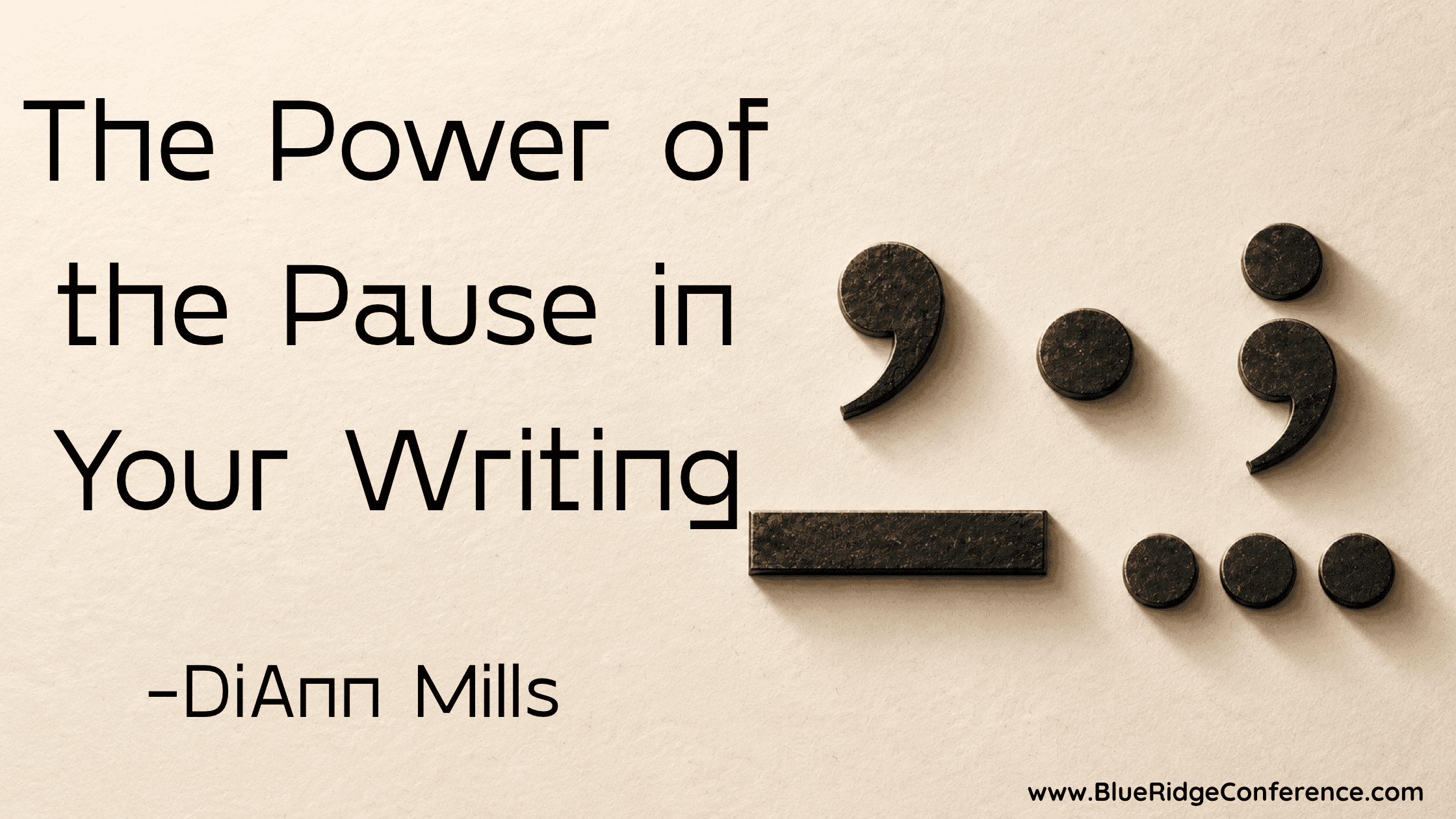
By DiAnn Mills @DiAnnMills
A pause in fiction has the potential to add power to your story. Properly used, a pause adds depth to the plot, emotion, character, foreshadowing, and symbolism. The moment of silence can carry more meaning than the words around it
Pauses can:
A sentence completes a thought, and it most commonly ends with a period. That is a pause. A sentence may need a comma(s), and those are another pause. White space separates paragraphs, and that is a pause. And there are more! Em dashes, ellipses, body language, end-sentence punctuation, and short or fragment sentences after long sentences.
When a character uses body language, the reader reacts emotionally. Often the response is, “What’s coming next?” and the question builds stress, tension, and conflict according to the genre and the character. The reader merges deeply into the character’s world and moves farther from their own. A reader asks, “How would I handle this situation?”
The Power of the Pause in Your Writing by @DiAnnMills on @BRMCWC #Writing #Writingtips #BRMCWC Share on XWhat does the following say to you?
Each action allows the reader to interpret what is or isn’t going on in the inner character. The reader eagerly turns pages.
A pause doesn’t mean the writer jumps into explaining what is happening. Then, the technique becomes telling, and the power built into the pause is destroyed.
When a writer neglects to use pauses, the reader can grow bored and distant from the story. They lose interest and close the book because it has failed to draw them into a unique and unpredictable story world.
The opposite of overusing pauses distracts the reader. Everything prompts the reader’s attention, so nothing builds any power. The same outcome occurs: the book fails to draw the reader into a unique and unpredictable story world.
Find your favorite book and read it aloud. Do you hear where you naturally pause? Most generally it’s when you need a breath or stop to process the action.
What happens if you eliminate the pause? Are you able to continue experiencing the story world?
Plan intentional pauses, not only for grammar but for genre, characterization, plot, emotion, and all the other story essentials.
Dad had to be asleep.
I slowly turned the knob, and sweet relief spread through me. I welcomed the darkness to mask my quiet entry. No lights. I was safe. I planted my foot on the step where I knew no creak would sound. I’d made this trek often.
“Son, stop right there.” Dad’s voice thundered.
I froze.
“You’re past curfew. We need to talk. Now.”
Which one of the above do you prefer? Why?
Study your favorite authors to discover where they place pauses. Does it enhance the reader experience? Now, develop your writing voice to create a better story.
The power of the pause affects how your story is received.
I challenge you to use it.
How do you view writing pauses?
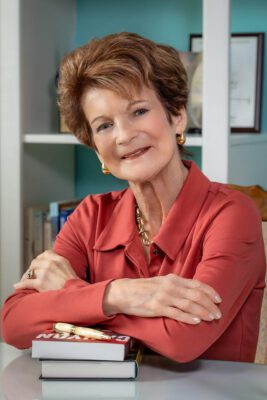
DiAnn Mills is a bestselling author who invites her readers to step into stories where suspense meets adventure and romance warms the heart. Known for crafting unforgettable characters tangled in unpredictable plots, DiAnn believes every breath we take unfolds a story waiting to be told—so why not make it thrilling?
Her novels have consistently landed on bestseller lists including CBA, ECPA, and Publishers Weekly, and have won prestigious awards such as the Christy, Selah, Golden Scroll, Inspirational Readers’ Choice, and Carol awards.
DiAnn is a founding board member of American Christian Fiction Writers and Conference Advisor for the Blue Ridge Mountains Christian Writers. She actively participates in Advanced Writers and Speakers Association, Mystery Writers of America, the Jerry Jenkins Writers Guild, International Thriller Writers, Outliers Writing University, and The Christian Pen. DiAnn passionately invests in helping fellow authors succeed through mentoring, book coaching, and editing. She travels nationwide speaking and teaching engaging writing workshops.
A proud coffee snob who roasts her own beans, DiAnn also enjoys diving into good books, experimenting in the kitchen, and unabashedly spoiling her grandchildren—whom she insists are the smartest kids in the universe. She and her husband make their home under the sunny skies of Houston, Texas.
Connect with DiAnn online for behind-the-scenes glimpses, writing tips, and lively discussions: Facebook, X, Instagram, Pinterest, Goodreads, BookBub, YouTube, LinkedIn, or her website: diannmills.com.
