
by Cindy Sproles @CindyDevoted
There are writers who, at the turn of a hat, can switch genres. They can write anything. And that’s wonderful. When a trend changes, they can hop on the wagon and whip out book after book. When the trend moves in a new direction, they can as well.
I’m not one of those writers. I’ve dabbled in other genres outside of my Appalachian Historical, and I can write them. The thing is, I’m not that writer. I’m not a romance writer, or a fantasy writer. I’m an Appalachian historical writer.
I was recently asked to write a true story about the fiction I write. It was an easy yes because I am passionate about this genre. My question to you: Are you passionate about what you write? Does your mind wander in the grounds of the genre you love? Mine do. So much so that I can imagine my footprints in the dust of the mountains.
This made me want to encourage you to write your passion. Regardless of what anyone tells you, write what you are passionate about. Don’t allow anyone to veer your heart away from what you know you were meant to write. And if you are unsure about your passion, then ponder on your writing heart’s desire —not awards, not contracts, not books on the shelf, but your heart’s message to the world. Find your passion.
Writing Your Passion by @Cindy Devoted on @BRMCWC #Writing #Writinglife #BRMCWC Share on XI’m offering you a challenge. Take the time to do as I have done. Write about your passion. You’ll be amazed at what comes out when you ponder, dig, and write about what you love. Here’s mine:
My mother will be 100 years old in August. Most folks who make it to her age are sporting around a grocery bag of medications. Mom takes a blood pressure pill and a thyroid tablet. That’s it. To be one-hundred, Mother is exceptional. In fact, she’s so exceptional that she turns out a queen-sized quilt every other month. We rent a climate-controlled storage building to house her, over eighty quilts, and wall hangings. None of which Mom will sell.
I often have folks ask me what made me choose to write Appalachian Historical fiction. That’s an easy answer. My mother was one of seven children, four daughters and three sons. Though I was not raised on my grandmother’s farm, I was raised in the middle of an Appalachian family where we yearly planted a huge garden, a tobacco allotment, and cared for her animals. When the garden came in, it was a family affair. All the brothers and sisters, their husbands, wives, and children spent weekend after weekend, canning and creaming corn, breaking green beans, shelling October beans, and making apple butter. I learned quickly that the large copper pot was big enough to drop me in and boil me. Or at least that’s what my uncles would tease us about. My family is a true Appalachian family.
Mom is now the matriarch. She was third from the bottom of the kids, but she has outlived them all. Her last sister passed away ten years ago. So, when I’m asked why I write Appalachian stories, it’s because I still have a living relative to share mountain stories with me. I’m grateful for the upbringing I’ve had. We didn’t have tons of money, but we had enough. My mother made my clothes, from my panties to my dresses, and she taught me to sew. Her brothers taught me how to milk a cow, slop the pigs, and fight off a rooster. And my grandmother taught me to plant by the moon, to stand my ground, and to never be a quitter.
As a child, I remember grandma, all her daughters, daughters-in-law, and granddaughters gathering around a set of quilt frames my uncle built. We each held a needle and thread that we used to stitch quilt after quilt. There were times I dreaded the quilting bees, but when the quilts rolled off the frames, they held more than fabric and thread.
Each quilt held hours of family time. The women aired their issues, shared opinions, memorized scripture, but most importantly, they talked. There were no phones. No social media, unless you counted Mildred at the feed store, who knew everybody’s business and was quick to share it. We had one another.
I heard my grandmother talk about being born in a wagon train following the Native Americans’ Trail of Tears route. She told me about the hardships of living in the hollers and crevices of the mountains, and she taught me about the Good Lord whom she believed in but didn’t accept as her savior until she was 82.
Every stitch that made its way into a quilt was a memory, a memorial to the way life used to be. They symbolized life lessons, deaths, births, and seasons. I remember seeing that set of quilt frames sitting in Grandma’s living room. Ten chairs surrounded it. And I remember a chair being removed with each death until only my mother’s chair remained. It was like a dream, watching each sister vanish into eternity. I asked my mom what we would do with the quilt frames once my grandmother passed. “We’ll keep stitching memories until there are none.” When we walked into the living room after Grandma’s death, only one chair remained by the frame. My brother and I disassembled them and put them in storage next to the long apple butter stir and the clay crock. Mom began to quilt on her lap, never to sit behind the quilt frames again.
An interviewer once asked me, “Why do you write hard Appalachian stories?” Again, the answer was simple. “Because life was not easy in the mountains. It was hard. Folks lived by the sweat of their brow and managed on their ingenuity and innovativeness.” Our mountains are breathtaking. They boast meadows blanketed by stands of gentle knee-high grass, white daisies, and fields of lilac and lavender. Wisteria rungs hold uncountable clusters of deep purple blooms, and the summits are so high, you’d swear you could open the door to heaven and step in. Clouds float on a sea of blue, and the hawk soars on the breeze. But life in this beauty was not easy, and it claimed the lives of many. Proof that beauty can be deceptive.
I opened the door to our storage building to add Mom’s latest creation. My husband pulled away the blue tarp that covered her 70-plus years of work. Folded and stacked from floor to ceiling, quilts of every color and design whispered memories to me. I ran my hand along the blankets, and a smile crossed my lips. Aunt Gerlene’s giggle echoed in my mind. Aunt Bea’s boisterous opinion, Aunt Reba’s gentle touch, and Aunt Marjorie’s kindness. My grandmother’s strict instruction and my mother’s teachable spirit spun through my imagination. Every stitch they made on each quilt held meaning, their love, and their mountain pride. Every thread they pulled through the fabric was a thread woven into my DNA. Those stitches molded me, shaped me.
When I look at my mother, her skin is now wrinkled with time, but still soft and beautiful, I see one of the few remaining true Appalachian women. I want to take in her tenacity, her determination for life. I want to be the woman my mother and her mother were.
I write Appalachian stories to honor the heritage of this nation and of my family. My desire is to never forget and to never let others forget the legacy of the mountain people— one stitch at a time.
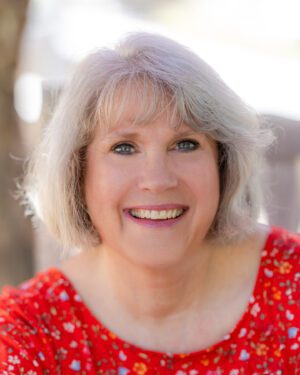
Cindy K. Sproles is an author, speaker, and conference teacher. Having served for a number of years as a managing editor for Lighthouse Publishing of the Carolinas and Ironstream Media, Cindy now works as a mentor, coach, and freelance editor. She is the co-founder of Writing Right Author Mentoring Services with Lori Marett and the director of the Asheville Christian Writers Conference. Cindy is also the co-founder of Christian Devotions Ministries and www.christiandevotions.us, as well as www.inspireafire.com. Her devotions are in newspapers and magazines nationwide, and her novels have become award-winning, best-selling works. She is a popular speaker at conferences and a natural encourager. Cindy is a mountain girl, born and raised in the Appalachian mountains, where she and her husband still reside. She has raised four sons and now resorts to raising chickens where the pecking order is easier to manage. You can visit Cindy at www.cindysproles.com or www.wramsforwriters.com.

The Conversation
And that’s why your stories resonate with me. Some of my favorite books were set in the Appalachians. Your passion runs through them. I loved this post, Cindy, especially learning a bit more about your mother and her quilts.
Your love for your family and the legacy they have passed to you are evident in your books. Yes, they are hard, but they are real. I remember the people in them long after reading the last page. As a new quilter I wish I had been given the gift of quilting with my grandmother. Quilts wrap us in the story of family and all that word means. Thank you for sharing this beautiful story.
Keep it up. Another proud hillbilly.